It came to me the other day how much I miss thinking and writing about poetry. So I am back.
Into the gap left when The Writers Almanac took its hiatus—about which I will not comment—came The Slowdown, a daily email from former U.S. Poet Laureate Tracy K. Smith. (I can't imagine the pain of being poet laureate in the administration of the orange buffoon. But I also should not comment on that right now.)
Today's poem struck me in its simplicity and in its superb contrast of everyday images and objects with the poem's immense emotional weight. It's "A Joke About How Old We've Become," by Adam Clay.
The use of negatives to circuitously say something positive was the first thing that struck me about this poem. "Why not instead," "best not to fill," "how not to worry," "as if time won't eventually." The repetition of "not" in positive contexts gives the poem a sense of inevitability. But try as they might—and it seems they are trying—all these "nots" can't combat the one thing in the poem that is specifically "positive" but is the worst negative of all: the test results.
Negative space is the flip side of that negative language, and it's something I've rarely noticed in a poem. Often the shape of the lines can create negative space on the page, but instead, here the poet has created a number of empty spaces to be filled, or not filled, with words and images. He even says so in the middle of the poem: "sometimes it's best / ...not to fill / any space with words." There are many spaces in the poem, from the baskets hanging in midair to the body stretching, the space of the room to be crossed, "blank space" around the flag, the space of three decades, and the space "of stepping back we all do."
One form of blank space usually frowned upon in poetry as unnecessary is the homely article. How many poems have had all the "the"s and "a"s critiqued or edited out of them? A fair number of mine, anyway. But this poet uses articles as a way to slow the poem down, itself a "slow-draining sink," its weight seeping into the reader drip by drip. In one stanza, every line begins with "the," creating a rhythm: "the album... / the minor... / the room." We have not only "the plants" but also specifically "the plants in the hanging baskets." "The stars and the stripes." And most importantly, "the tests." Nouns in this poem are given their own space, their own weight, to settle in the reader's mind as familiar objects so that the speaker's fear and sadness are also familiar and become the reader's own.
My father's tests are positive, too. So maybe this poem speaks particularly loudly to me. I'd love to hear what you think of it.
Thursday, February 27, 2020

Friday, November 4, 2016
Forwarding Address
Now that I've gone freelance and have a website showcasing my work, I'll be posting over there. I suppose that if I have any major rants, they can live on this blog. Otherwise, find me at writeheidiwrite.com from now on.
Wednesday, April 13, 2016
Losing work is NOT a thing of the past
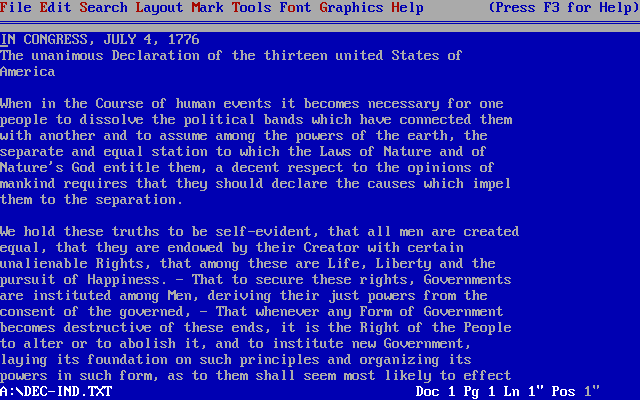 Remembering WordPerfect makes me feel old, but never having to ever use WordPerfect again makes me feel youthful and free. In the "olden days," typing merrily along (with my copy propped against a steel TypePal copy holder), I might accidentally hit the insert key instead of the delete key. There I'd be, blithely overwriting unknown quantities of characters, sentences, or paragraphs, instead of simply deleting one character and moving on.
Then there were random crashes, file naming errors (this was back when filenames were restricted to—I forget exactly—maybe 8 characters, and couldn't include spaces), and seemingly scores of other interesting ways to ruin your day by losing the work you'd done.
Today, I use Dropbox and a variety of other tools and I feel super safe about my work always being saved...but it's a false sense of security. Sure, my Word docs are backed up to Autosave all the time and to Dropbox at lightning speed, but that lulls a person, doesn't it? Makes you forget about the importance of constantly saving. Makes you forget about the difference between composing in Word and composing in a browser.
Makes you scream and whine bad words when you're trying to learn WordPress and you've been composing in the browser and suddenly you get a very nasty error:
Not Acceptableand then you just can't recover the post, no matter what you try. (Like, copying the entire text, intending to paste it into another doc, but then copying your password onto the clipboard just before deleting everything...)
An appropriate representation of the requested resource /public_html/wp-admin/page.php could not be found on this server.
Additionally, a 404 Not Found error was encountered while trying to use an ErrorDocument to handle the request.
Lucky for me, I won't have to rewrite much; maybe thirty minutes worth of work. Lesson learned.
Mostly. I'm actually composing this in the browser. Old dog.
Tuesday, March 22, 2016
Not the brightest coworkers.
My new coworkers are loud, demanding, and obnoxious. They're always hungry and always leaving poop on my doorstep. They interrupt conference calls with their cackling. This one even spies on me.

But they never drink the last of the coffee, and they don't break the printer, steal my pens, or load dishes incorrectly in the dishwasher. I think we'll get along just fine, after all.

But they never drink the last of the coffee, and they don't break the printer, steal my pens, or load dishes incorrectly in the dishwasher. I think we'll get along just fine, after all.
Monday, March 21, 2016
Chill out, already.
Another for the Lessons Learned file.
I got a lead on a healthcare copywriting project via LinkedIn ProFinder and applied; they responded asking me to bid the job. They provided most of the details, but not all; one item stipulated "some" sections to be written, but not how many.
I'd already mentioned that I might have questions, so I sent an email. But I couldn't just ask for clarification around the specific things I needed to know to finish the bid—no, no, that would be too easy. Instead, to show that I had experience in the industry and that I'd given the project a lot of thought (and because I simply wanted to know), I went ahead and fired off seven...SEVEN...additional questions. Including, to my chagrin, "would I have direct access to the client" for even more questions, once I was on the job.
Nice work, dumbass. Followed up today and, of course, they've "already got it taken care of." Because who wants an overeager show-off on their job, let alone asking for access to their client? Pro tip: Don't do that.
Monday, March 14, 2016
Could indenting make subject lines stand out?
I spent part of this morning working on an article about best practices for responsive emails in the pharmaceutical industry, a sort of 101 for pharma marketers. One section dealt with optimizing headlines. Then I saw this in my inbox:

The indented subject line really stood out in the list of emails, and I thought, how clever! But then I clicked on the email and realized that it wasn't a clever indent, it was emojis from which Gmail was apparently saving me. After having "read" the email, the emojis appeared in the subject line.

My spam folder shows me that emails with emoji in the subject line are usually screened, but I must have told Gmail that Ads of the World mail isn't junk. It made me wonder, though, about actually just using spaces in the subject line to indent it and make it stand out. As soon as I get my MailChimp account set up, I'm going to give it a try.
Friday, March 4, 2016
"The flame beneath the pot"
Beautiful language can reach right off the page and startle you into a wide-awake, pleased wonderment, like a sudden kiss from someone you have a huge crush on. I read poetry in the hopes that I'll get that shivery rush.
Yesterday's Writer's Almanac poem, "Lobsters," by Howard Nemerov, did it. Even though the lovely turns of phrase are mostly morbid, I was enchanted with the powerful simplicity of the language.
These lines in the second stanza made me want to applaud: "Their velvet colors / Mud red, bruise purple, cadaver green." The perfection of the phrase "mud red": it simultaneously brings to mind "blood red" and also that absolutely correct muddy ochre color of lobsters. "Cadaver green" is a horribly delicious (sorry) irony, describing creatures whose bodies won't last long enough to be called cadavers.
The ending of the poem is very Yeats-ian, very "what rough beast," to me, but maybe that's because I just finished reading The Stand for perhaps the tenth time. (King seems to have turned this poem of 22 lines into a novel of over 1,000 pages). I won't spoil it; go read the poem.
Yesterday's Writer's Almanac poem, "Lobsters," by Howard Nemerov, did it. Even though the lovely turns of phrase are mostly morbid, I was enchanted with the powerful simplicity of the language.
 |
| By GrammarFascist (Own work) [CC BY-SA 4.0], via Wikimedia Commons |
These lines in the second stanza made me want to applaud: "Their velvet colors / Mud red, bruise purple, cadaver green." The perfection of the phrase "mud red": it simultaneously brings to mind "blood red" and also that absolutely correct muddy ochre color of lobsters. "Cadaver green" is a horribly delicious (sorry) irony, describing creatures whose bodies won't last long enough to be called cadavers.
The ending of the poem is very Yeats-ian, very "what rough beast," to me, but maybe that's because I just finished reading The Stand for perhaps the tenth time. (King seems to have turned this poem of 22 lines into a novel of over 1,000 pages). I won't spoil it; go read the poem.
Tuesday, March 1, 2016
The old-fashioned way
I just wrote an inquiry letter to the creative director of a 118-year-old brand on this:
I wanted to say, "This is not just some email I'm dashing off, or InMail, or a tweet...I really thought about this." I didn't want to say "enough to retype it twice," but that may have come through.) For a brand that cares about quality and heritage, I thought this might be a good approach.
I'll keep you posted.
 |
| I bought this at an antique store last week. Surprisingly, ribbons are available on Amazon and, apparently, also at Staples. Guess I'm not the only one. |
I wanted to say, "This is not just some email I'm dashing off, or InMail, or a tweet...I really thought about this." I didn't want to say "enough to retype it twice," but that may have come through.) For a brand that cares about quality and heritage, I thought this might be a good approach.
I'll keep you posted.
Monday, February 15, 2016
Lesson Learned: It's no good if you don't capture it.
I recently did a workshop with a client to define some key elements of the brand. We talked and brainstormed for about three hours, doing some great work, delving deep and coming up with a lot of insights.
At the end of the workshop, I blithely snapped a few pics of the whiteboard over which I'd just been presiding. The client was waiting for me for another activity, so I was hustling to gather all my gear and get on with the agenda. Someone even asked me if I wanted them to record the stuff on the whiteboard. "That's OK," I said. "I took pictures." I felt capable and prepared.
When I got back to my office, here's what I found on my iPhone:

Not terribly useful, huh?
Lesson learned: Take your time with recording valuable data and insights. You risk wasting the entire experience—not to mention embarrassing yourself in front of your client—by failing to do so.
Fortunately, with some time spent in Photoshop, zooming in and changing the contrast on the hard-to-read Post-Its in my terrible photo, I was able to save the information. Needless to say, I chalked those hours up to tough lessons learned.
Wednesday, October 7, 2015
Documentation!
In an internal review yesterday, someone mentioned that we need to make sure to make the logos at the top of the email clickable ("hot"). We don't have a good system for recording this decision or making sure this gets done in the build. I'm getting on the documentation bandwagon, big time. Be forewarned.
Tuesday, September 29, 2015
How to Write an Ad Like an Idiot
What happy horseshit is this?

I saw this ad in National Geographic (from this year, no less) while waiting in the dentist's chair. Naturally, I was appalled.
The ad left me filled with burning questions: Do men tell time differently than others? What split-personality dunderhead needs a watch with both a digital and an analog readout? How can that watch be as sturdy as they say it is for only $59?
And, who the hell puts that much copy in a print ad?
The ad is written in the first person, like a letter to you, Dear Reader. It's filled with action ("swinging a hammer"! "changing a tire"!) and description ("chromed," "heavy-duty," "bright green" [WTF?], and both "luminous" and "electroluminescent" [whatever that means]).
Who, aside from the occasional dumbfounded copywriter, is going to read this stuff?
I'd like to know the answers to all of these questions, but most of all, I'd like to know whether they sold any of these watches.
Thursday, August 27, 2015
Do you sell to writers? Maybe consider using good writing.
I heard about a new writing app called Ulysses.
(Questionable name, I think. I'd guess the largest percentage of their
potential customers would associate this name with pain and boredom; a smaller
percentage don't know what it means, and the smallest proportion associate it
with utter genius. But that's not my point.)
The point is, I went to the website and was asked a question.
The point is, I went to the website and was asked a question.

Why, yes. Yes, I do. But this isn't a date; you shouldn't be
shutting up about yourself and asking me all about me. In the case of a landing
page, it's all about YOU. What the hell are you? From the home page of Ulysses'
site, I have no idea what the product is.
More importantly, from a conversion standpoint, what do you
want me to do?

Oh, OK, you want me to watch the video. In it, I'm sure,
you're going to tell me all about your product.
But wait. You don't. The only words in the whole video are
"Do you write?" The video doesn't say anything about what the app
does. No benefits, no features, nothing. It doesn't describe the product at
all. It shows people using Macs.
The home page also fails in telling me what to do. Users
want to know what's going to happen when they click a button; we can help them
by providing clear, meaningful CTAs. "Learn more" is everyone's
favorite CTA to deprecate, but at least it gives a clear command.

These buttons do not. How about "discover" or
"meet" or even "learn about" or "see"—in short,
how about a verb here, please?
The app is for writers. From this page, it doesn't appear
that Ulysses employs any.
Once I click in, though, it becomes clear that they employ
too many—or at least, that their writers employ too many words.

What? Make up your mind. Which is it? What does this even
mean? That's a question I asked myself a lot reading through the
verbiage on this page.

"Consider yourself a night owl?Ulysses offers a dedicated Dark color mode. It's said to also save energy."
Weak. "Consider yourself" is waffling; this should be "are you." But you haven't made the connection between being a night owl and using Dark color mode, anyway, so your offer of a "dedicated" (what the hell does that even mean here?) Dark color mode is a non sequitur.
And then the last sentence. OK, Yoda: this is your big
selling point? "It's said to"? You may as well say "We don't
actually believe that it saves energy, and there's no evidence to support this
half-assed claim, but we're just putting it out there."
And come on, people. Proofread. You're marketing to writers, who (while we're not all copyeditors) are likely to notice that you forgot a space between the first two sentences.
And come on, people. Proofread. You're marketing to writers, who (while we're not all copyeditors) are likely to notice that you forgot a space between the first two sentences.

"When it comes to distraction-free writing, there's still no better way than going full screen. We know. We invented it."
You invented going full screen. Yeah.
It's bad enough that any site should have writing this awful. But a site selling something to writers? Wow.
Thursday, July 30, 2015
Very Punny
Some people hate puns. In my family, if you can't take puns, you'll take some punishment. I grew up with wordplay and have a healthy appreciation for puns (thank goodness, or I wouldn't be able to tolerate my husband for five minutes).
Obviously, there's a time and a place; copywriters need to be judicious. It seems journalism allows more opportunity for punsters than digital marketing does. I wish I'd been the one to write this headline:

Obviously, there's a time and a place; copywriters need to be judicious. It seems journalism allows more opportunity for punsters than digital marketing does. I wish I'd been the one to write this headline:

Tuesday, July 28, 2015
Take a Lesson (or 36) from Don
Just came across this fantastic infographic from Joanna Wiebe and Copy Hackers. I got a lot out of Mad Men, but it's wonderful to have the copywriting lessons all assembled in one place! Now I need to go rewatch the whole series.

Courtesy of: Copy Hackers
Monday, July 27, 2015
Boy do I love me some good button copy
A call to action (CTA) is an exhortation to do something specific. On a website, they usually appear on buttons or links; the action here (sign up, buy now) will happen after the user clicks.
At the 2014 Authority Intensive conference, I heard Joanna Wiebe of Copy Hackers discuss the user's fear of commitment as it relates to clicking a button. Joanna advised that we remove that fear by helping the user understand what will happen after the click. (Joanna wrote the book on button copy, btw.)
Clear CTAs that provide a sense of what's going to happen create good user experience; they're good for conversion; they enrich the whole site; and they're fun to write, unlike this:

Recently I wrote about the concise, verb-rich writing on Zuli's site. Their calls to action deserve a few words of praise, too. Just look at these clear drivers from their home page:
For every one of these, I had a good idea of what was going to be on the other side of the click.

Simplicity IS harder than it looks. It's nice to see some folks doing a great job.
At the 2014 Authority Intensive conference, I heard Joanna Wiebe of Copy Hackers discuss the user's fear of commitment as it relates to clicking a button. Joanna advised that we remove that fear by helping the user understand what will happen after the click. (Joanna wrote the book on button copy, btw.)
Clear CTAs that provide a sense of what's going to happen create good user experience; they're good for conversion; they enrich the whole site; and they're fun to write, unlike this:

Recently I wrote about the concise, verb-rich writing on Zuli's site. Their calls to action deserve a few words of praise, too. Just look at these clear drivers from their home page:
- See for yourself
- Experience it
- Pop the hood
- Check it out
- Get answers
For every one of these, I had a good idea of what was going to be on the other side of the click.

Simplicity IS harder than it looks. It's nice to see some folks doing a great job.
Thursday, July 16, 2015
Verbiage need not apply.
I love the word "verbiage" because I'm a bit off and I tend to like confusing things.
"Verbiage" is often misused. My coworkers might say "maybe Heidi can just write some verbiage," but they don't want me to craft "writing that contains too many words or that uses words that are more difficult than necessary" (thanks, Merriam-Webster). They actually mean "maybe Heidi can just write a short, concise blurb."
And, "verbiage" sounds like something it's not. The word isn't related to verbs at all; Merriam-Webster gives its origin as being from the Middle French verbier, "to chatter," and further back, from the Old French werbler, "to trill."
I also like it because it always brings to mind "roughage" and "foliage," so I get a mental image of a chewy, leafy word-wad. It's just fun.
What does appear here are verbs--a lot of them. In the hero copy alone, including the CTA, we have five verbs out of 27 words total. Yes, 18.5% of the copy is verbs. That's effective.
They're great verbs, too: simple and imperative. Meet. Connect. Control. Enable. Shop. If you just read the verbs (and I believe they resonate more with readers than other words), you already get the message. Now, that's doing it right.

"Verbiage" is often misused. My coworkers might say "maybe Heidi can just write some verbiage," but they don't want me to craft "writing that contains too many words or that uses words that are more difficult than necessary" (thanks, Merriam-Webster). They actually mean "maybe Heidi can just write a short, concise blurb."
And, "verbiage" sounds like something it's not. The word isn't related to verbs at all; Merriam-Webster gives its origin as being from the Middle French verbier, "to chatter," and further back, from the Old French werbler, "to trill."
I also like it because it always brings to mind "roughage" and "foliage," so I get a mental image of a chewy, leafy word-wad. It's just fun.
Better in Absentia
More than I love the word, I love that verbiage appears (in name or fact) absolutely nowhere on Zuli's lovely website.What does appear here are verbs--a lot of them. In the hero copy alone, including the CTA, we have five verbs out of 27 words total. Yes, 18.5% of the copy is verbs. That's effective.
They're great verbs, too: simple and imperative. Meet. Connect. Control. Enable. Shop. If you just read the verbs (and I believe they resonate more with readers than other words), you already get the message. Now, that's doing it right.

Wednesday, July 15, 2015
Selling to zombies.
Is it wise to imply your customers, or their teams, are dead?

The people even look like zombies--well, except for the robot. This headline doesn't mean much, unless the customer's team IS, in fact, dead. It's a waste of words. "Bring your team together," although equally un-snappy, is so much stronger.
"Chat in groups or privately. Share files. Work seamlessly."
Bam.

The people even look like zombies--well, except for the robot. This headline doesn't mean much, unless the customer's team IS, in fact, dead. It's a waste of words. "Bring your team together," although equally un-snappy, is so much stronger.
The Subhead Is Dead, Long Live the Subhead
The subhead is as dead as the team here. It's not a complete sentence, so why does it get a period? It's not a complete sentence because it doesn't contain any verbs, but verbs are what sell. How about this:"Chat in groups or privately. Share files. Work seamlessly."
Bam.
Thursday, July 9, 2015
Repeat the right line.
Sometimes, a little repetition makes a great point, which is especially handy if you're really sure of the point you want to make. Check out this succinct "about" copy from theSkimm:

"Across subject lines and party lines" says a lot with just that little bit of epistrophe (the repetition of a word at the end of successive clauses). You can't always fit "we're a bipartisan publication" into so few words.
But why "subject lines" and not "headlines"? Their service creates synopses of news, not emails. Nice effort here, theSkimm, but you need to push a little further.
Sunday, July 5, 2015
Selling ash with a story.
I learned about storytelling as an integral part of
marketing the summer after Mt. St. Helens blew. My little brother and I were in
Michigan visiting our grandparents, and somehow we wound up with a little stand
in front of a Baskin-Robbins, selling little vials of ash for a dollar each.
When a man accused us of tipping our parents’ ashtrays into
the vials in lieu of real volcanic ash, I was outraged. By the time I finished
telling about the sky-ripping crack we’d heard all the way to the Oregon Coast
and the ash-covered Jungle Gym in our back yard, the man had become a
customer—and we’d gathered a crowd. We sold out of ash and I learned two things
about storytelling: that it’s an incredibly powerful means of product
marketing, and that I wanted to do it.
(The third thing about storytelling, which I learned much
later, is that it’s a clichéd term. But like any of Shakespeare’s famous quips,
it’s become cliché because it’s an accurate descriptor.)
A product’s story, or the story of the brand behind it, creates
a connection. For the doubting Thomas in front of that Ann Arbor
Baskin-Robbins, the detail and emotion of my recollections validated the
authenticity of the ash. For a housewife buying laundry detergent, a product or
brand story can be equally important. Its purpose isn’t to convince her there’s
actual detergent in the jug; it’s to convince her that the detergent will work
and is the right choice for her family.
Brands go about telling their stories, and their products’
stories, in very different ways with varying degrees of effectiveness. A large
part of the story is big-picture: big concepts, like integrity, or quality, or
comfort. But a large part of storytelling is in the details, from design
decisions to word choice. To be truly effective, marketing must not only choose
the right concepts but also make sure that the details back up and pay off
those concepts.
Subscribe to:
Posts (Atom)