Is it wise to imply your customers, or their teams, are dead?
The people even look like zombies--well, except for the robot. This headline doesn't mean much, unless the customer's team IS, in fact, dead. It's a waste of words. "Bring your team together," although equally un-snappy, is so much stronger.
The Subhead Is Dead, Long Live the Subhead
The subhead is as dead as the team here. It's not a complete sentence, so why does it get a period? It's not a complete sentence because it doesn't contain any verbs, but verbs are what sell. How about this:
"Chat in groups or privately. Share files. Work seamlessly."
Sometimes, a little repetition makes a great point, which is especially handy if you're really sure of the point you want to make. Check out this succinct "about" copy from theSkimm:
"Across subject lines and party lines" says a lot with just that little bit of epistrophe (the repetition of a word at the end of successive clauses). You can't always fit "we're a bipartisan publication" into so few words.
But why "subject lines" and not "headlines"? Their service creates synopses of news, not emails. Nice effort here, theSkimm, but you need to push a little further.
I learned about storytelling as an integral part of
marketing the summer after Mt. St. Helens blew. My little brother and I were in
Michigan visiting our grandparents, and somehow we wound up with a little stand
in front of a Baskin-Robbins, selling little vials of ash for a dollar each.
When a man accused us of tipping our parents’ ashtrays into
the vials in lieu of real volcanic ash, I was outraged. By the time I finished
telling about the sky-ripping crack we’d heard all the way to the Oregon Coast
and the ash-covered Jungle Gym in our back yard, the man had become a
customer—and we’d gathered a crowd. We sold out of ash and I learned two things
about storytelling: that it’s an incredibly powerful means of product
marketing, and that I wanted to do it.
(The third thing about storytelling, which I learned much
later, is that it’s a clichéd term. But like any of Shakespeare’s famous quips,
it’s become cliché because it’s an accurate descriptor.)
A product’s story, or the story of the brand behind it, creates
a connection. For the doubting Thomas in front of that Ann Arbor
Baskin-Robbins, the detail and emotion of my recollections validated the
authenticity of the ash. For a housewife buying laundry detergent, a product or
brand story can be equally important. Its purpose isn’t to convince her there’s
actual detergent in the jug; it’s to convince her that the detergent will work
and is the right choice for her family.
Brands go about telling their stories, and their products’
stories, in very different ways with varying degrees of effectiveness. A large
part of the story is big-picture: big concepts, like integrity, or quality, or
comfort. But a large part of storytelling is in the details, from design
decisions to word choice. To be truly effective, marketing must not only choose
the right concepts but also make sure that the details back up and pay off
those concepts.
When I get up in the middle of the night, I have to try very hard not to wake up too much, or I will have a tough time getting back to sleep. Usually this means that, as I stumble to the bathroom, I'm hanging on tightly to some piece of the dream I was just having, so that when I return to bed I can envision it and hopefully drift back off.
Last night the image I held to was a sort of flat, grayish box with a bunch of other shapes on it. I just kind of kept thinking about it as I did my stuff. But as I crawled back into bed, I had a revelation.
Wait a second. That grayish box. It's got other grayish boxes on it. It's like a piece of paper, maybe, or something you'd see on a screen....
Then it hit me. A wireframe? I've been dreaming about a wireframe?
I've recently come across a couple of fun items that play with movie titles. Artist Austin Light removes one letter from the title of popular movies and illustrates the result, with a catchy little blurb explaining the new movie's premise. The results are hilarious.
And Teleclub's agency Y&R Zurich has added an extra letter, in the form of a brand logo, to movie titles to create a strong ad campaign with the tagline "We won't ruin your movies."
I thought it would be fun to apply this concept to poetry, so I played around with William Carlos Williams' "This Is Just to Say."
“I was working on the proof of one of my
poems all the morning, and took out a comma. In the afternoon I put it back
again.”--Oscar Wilde
Punctuation is important. Grandma, especially, thinks so.
I started out writing a post about Whirlpool’s brilliantly-punctuated new tagline: the beauty of the comma placement; the deliberate lack of period that
gives the phrase a double meaning.
Three choices make this phrase wonderful.
The choice to make "every day" two words, rather than one, makes "every" an adjective that modifies "day," rather than "everyday" an adjective that modifies "care." It's deliberately not "everyday care."
The choice to use a comma puts this phrase in the imperative mood, making "care" a commanding action verb. (Linguistics Girl has a great post explaining this.)
The choice not to use a period, which goes a long way toward reversing the grammatical effect of the first two choices, giving the phrase two meanings at once. Without a period, the tagline isn't wholly a statement. It can do double duty, conveying both "everyday care" and "every day, care." If it had a period, the imperative mood would be much stronger, leaving the "everyday care" message in the dust.
The new campaign is about the everyday care that families give one another, and also implies the kind of care Whirlpool appliances give to our laundry and dishes. (Whirlpool's new Every Day Care Project web page and supporting assets do a wonderful job of conveying this sense.) The double meaning of the tagline is brilliant. It reminds me of another tagline's precise word and punctuation choices.
Grammar Girl has a great discussion of the grammatical implications of the use of "different," rather than "differently," in this famous Apple slogan. The use of "different" allows the phrase to mean both "think about different kinds of computers" and "think in a different way."
A colon punctuating this phrase, "Think: different" would have emphasized the first meaning, "think about different computers." Without the period at the end, the slogan would lose some of the weight of the imperative mood; it wouldn't be as strong a command. As it is, the phrase conveys both meanings beautifully.
It was my intention to praise Whirlpool, and their agency, for this carefully-wrought phrase, perfectly punctuated to pack in double meaning.
But when I went on Whirlpool's web site to take a screen shot of the tagline, I found it used WITH A PERIOD.
Come on, Whirlpool. Make up your mind. Every day, care ... about punctuation.
In modern web design and content strategy for the web, it’s
important to remember that there is no longer any such thing as an entrance to
the site, especially if you’re doing yourSEO well. Any page can be an entry to the site and must therefore
provide a warm welcome to visitors (and location awareness, and brand identity,
and and and).
The same rule applies to television ads.
Creative agencies should think the same way about modern
television advertisements, understanding that the viewer might enter the ad at
any point. TV viewers get up to change the laundry, wash the dishes, or
check on the kids; we return to the set mid-commercial. Ads lose some or all of
their effect if they rely on viewers to watch from the beginning.
At my house, we watch a lot of football, but even I (one of
the rare breed who enjoy watching advertisements) use the commercial break as a
chance to chat about that last play, or finish making guacamole, or get another
beer. Often, my attention will be attracted to an ad partway through. This
creates an opportunity for the ad to have an effect, but that opportunity is
lost if the ad doesn’t pay off the partial view. If the ad relies on a setup
that I missed, that’s a fail.
This Dodge ad tells the story of the Dodge brothers, John and Horace, but if you’re not
paying attention at the beginning, or you’re not listening carefully to the
voiceover, you’re not going to get it. And while the remaining material isn’t
bad—revving engines and drag-racing imagery are still appealing, especially
to a muscle car aficionado like me—letting the viewer lose out on that story is
a big miss.
I do enjoy advertisements with a big reveal at the end, but
are they really as effective as an ad that delivers its message no matter where
the viewer picks up the thread? It depends on the placement, the saturation,
and the content.
Placement: In football games, for example, an ad that runs
during a timeout is more likely to get beginning-to-end attention than an ad
running at halftime, because viewers know the game will come back on again any
second and are more likely to sit still for commercials.
Saturation: If the ad is running several times during a
given program, using a build-up will work better. Viewers whose interest has
been piqued will likely watch from the beginning the next time the ad airs.
Content: It comes down to this: Is it a great ad that
appeals to its audience? (Guests shushed me during the Budweiser horse-and-puppy ad.) Then it will
get watched. But considering the audience’s entry point is critical in making
an ad effective for television viewers.
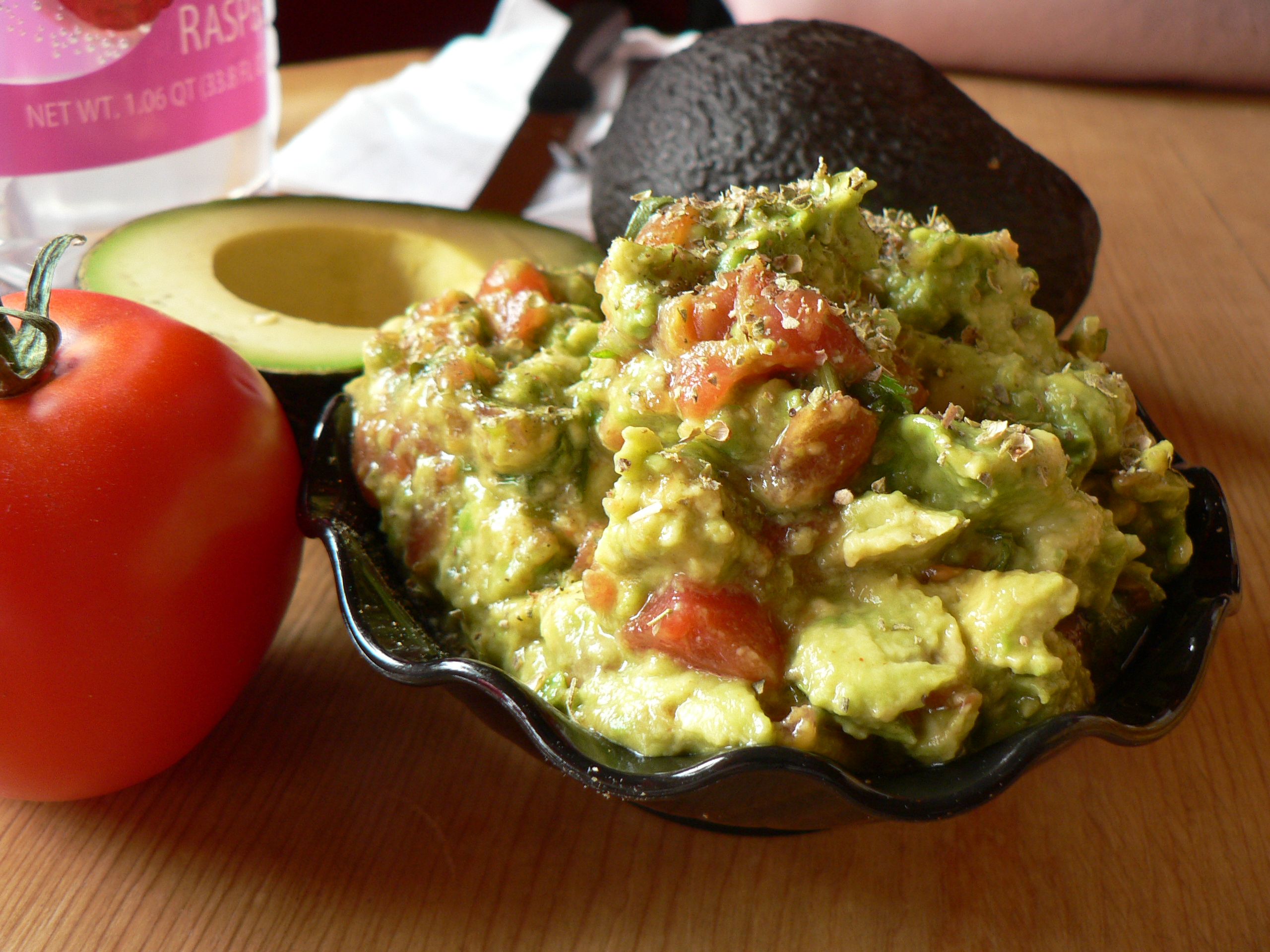
Guacamole photo by stu_spivack (CC-BY-SA-2.0), via Wikimedia Commons.
Family watching TV photo by Paul Townsend from Bristol, UK [CC-BY-SA-2.0), via Wikimedia Commons.