Wednesday, March 11, 2015

Thinking too much.

When I get up in the middle of the night, I have to try very hard not to wake up too much, or I will have a tough time getting back to sleep. Usually this means that, as I stumble to the bathroom, I'm hanging on tightly to some piece of the dream I was just having, so that when I return to bed I can envision it and hopefully drift back off.

Last night the image I held to was a sort of flat, grayish box with a bunch of other shapes on it. I just kind of kept thinking about it as I did my stuff. But as I crawled back into bed, I had a revelation.

Wait a second. That grayish box. It's got other grayish boxes on it. It's like a piece of paper, maybe, or something you'd see on a screen....

Then it hit me. A wireframe? I've been dreaming about a wireframe?


Oh, god.

Wednesday, December 10, 2014

Thin Is Just to Slay: Letterplay with Poems

I've recently come across a couple of fun items that play with movie titles. Artist Austin Light removes one letter from the title of popular movies and illustrates the result, with a catchy little blurb explaining the new movie's premise. The results are hilarious.

And Teleclub's agency Y&R Zurich has added an extra letter, in the form of a brand logo, to movie titles to create a strong ad campaign with the tagline "We won't ruin your movies."


I thought it would be fun to apply this concept to poetry, so I played around with William Carlos Williams' "This Is Just to Say."

Thin is just to slay

I have beaten
the plumps
that were sin
the icebox

sand wich
you were probably
slaving
for breakfast

Forgiven men
they were delicious
so sweet
and so bold

(Find the original here.)

I probably picked that poem because I've recently started following @justtosaybot on Twitter and I can't get enough.


Tuesday, November 11, 2014

Taglines: a punctuation parable.


“I was working on the proof of one of my poems all the morning, and took out a comma. In the afternoon I put it back again.”--Oscar Wilde

Punctuation is important. Grandma, especially, thinks so.


I started out writing a post about Whirlpool’s brilliantly-punctuated new tagline: the beauty of the comma placement; the deliberate lack of period that gives the phrase a double meaning.


Three choices make this phrase wonderful. 
  1. The choice to make "every day" two words, rather than one, makes "every" an adjective that modifies "day," rather than "everyday" an adjective that modifies "care." It's deliberately not "everyday care."
  2. The choice to use a comma puts this phrase in the imperative mood, making "care" a commanding action verb. (Linguistics Girl has a great post explaining this.)
  3. The choice not to use a period, which goes a long way toward reversing the grammatical effect of the first two choices, giving the phrase two meanings at once. Without a period, the tagline isn't wholly a statement. It can do double duty, conveying both "everyday care" and "every day, care." If it had a period, the imperative mood would be much stronger, leaving the "everyday care" message in the dust.
The new campaign is about the everyday care that families give one another, and also implies the kind of care Whirlpool appliances give to our laundry and dishes. (Whirlpool's new Every Day Care Project web page and supporting assets do a wonderful job of conveying this sense.) The double meaning of the tagline is brilliant. It reminds me of another tagline's precise word and punctuation choices.


Grammar Girl has a great discussion of the grammatical implications of the use of "different," rather than "differently," in this famous Apple slogan. The use of "different" allows the phrase to mean both "think about different kinds of computers" and "think in a different way." 

A colon punctuating this phrase, "Think: different" would have emphasized the first meaning, "think about different computers." Without the period at the end, the slogan would lose some of the weight of the imperative mood; it wouldn't be as strong a command. As it is, the phrase conveys both meanings beautifully.

It was my intention to praise Whirlpool, and their agency, for this carefully-wrought phrase, perfectly punctuated to pack in double meaning.

But when I went on Whirlpool's web site to take a screen shot of the tagline, I found it used WITH A PERIOD.


Come on, Whirlpool. Make up your mind. Every day, care ... about punctuation. 


Let's Eat, Grandma image thanks to Modern Austen.


There are other ways to make taglines work harder. See How to Make Words Do More Work.

Monday, November 3, 2014

No Entry: How TV ads are like web sites

In modern web design and content strategy for the web, it’s important to remember that there is no longer any such thing as an entrance to the site, especially if you’re doing your  SEO well. Any page can be an entry to the site and must therefore provide a warm welcome to visitors (and location awareness, and brand identity, and and and).

The same rule applies to television ads. 


Creative agencies should think the same way about modern television advertisements, understanding that the viewer might enter the ad at any point. TV viewers get up to change the laundry, wash the dishes, or check on the kids; we return to the set mid-commercial. Ads lose some or all of their effect if they rely on viewers to watch from the beginning. 

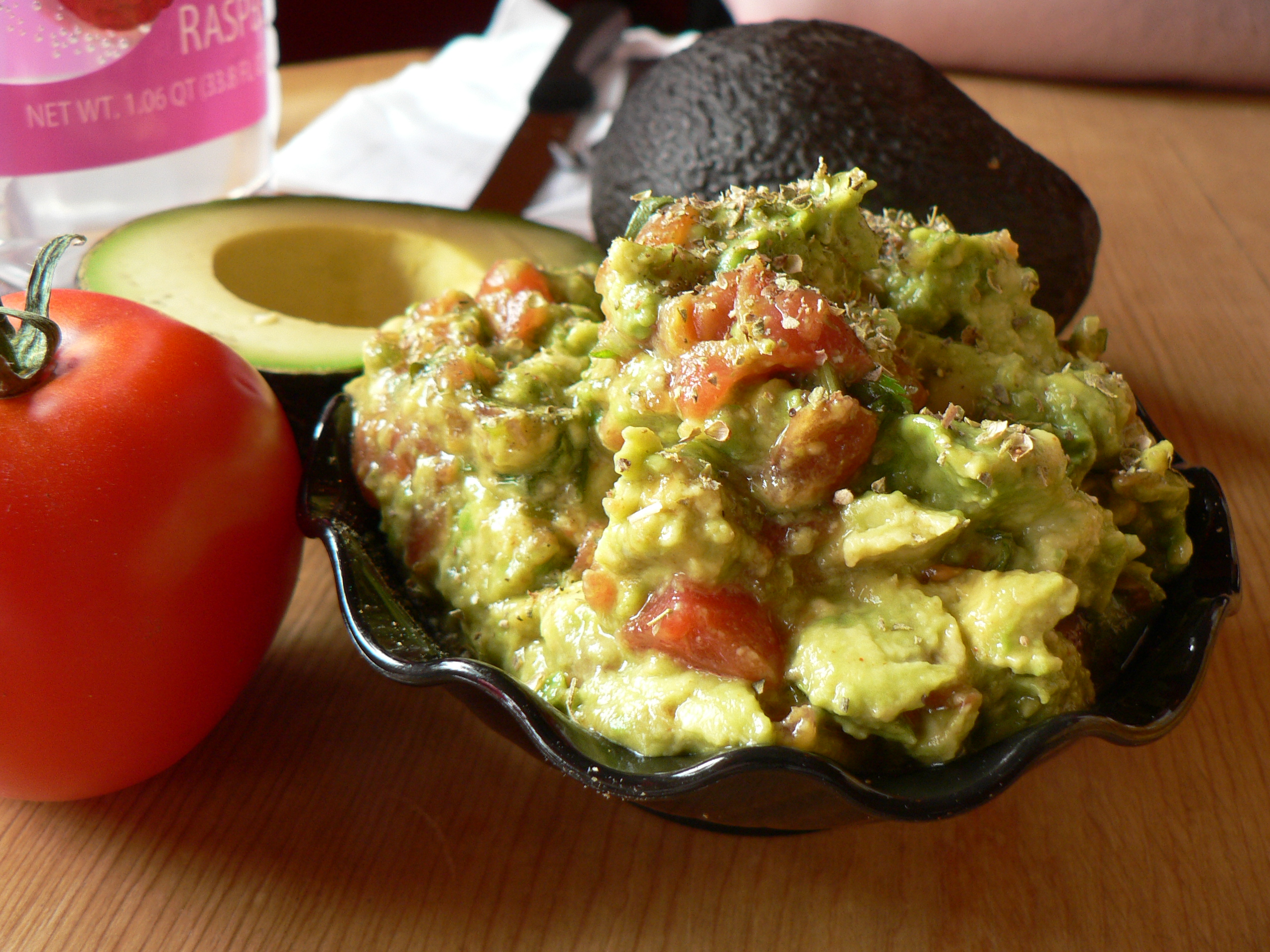
At my house, we watch a lot of football, but even I (one of the rare breed who enjoy watching advertisements) use the commercial break as a chance to chat about that last play, or finish making guacamole, or get another beer. Often, my attention will be attracted to an ad partway through. This creates an opportunity for the ad to have an effect, but that opportunity is lost if the ad doesn’t pay off the partial view. If the ad relies on a setup that I missed, that’s a fail.

This Dodge ad tells the story of the Dodge brothers, John and Horace, but if you’re not paying attention at the beginning, or you’re not listening carefully to the voiceover, you’re not going to get it. And while the remaining material isn’t bad—revving engines and drag-racing imagery are still appealing, especially to a muscle car aficionado like me—letting the viewer lose out on that story is a big miss.


I do enjoy advertisements with a big reveal at the end, but are they really as effective as an ad that delivers its message no matter where the viewer picks up the thread? It depends on the placement, the saturation, and the content. 

Placement: In football games, for example, an ad that runs during a timeout is more likely to get beginning-to-end attention than an ad running at halftime, because viewers know the game will come back on again any second and are more likely to sit still for commercials.

Saturation: If the ad is running several times during a given program, using a build-up will work better. Viewers whose interest has been piqued will likely watch from the beginning the next time the ad airs.

Content: It comes down to this: Is it a great ad that appeals to its audience? (Guests shushed me during the Budweiser horse-and-puppy ad.) Then it will get watched. But considering the audience’s entry point is critical in making an ad effective for television viewers. 


Guacamole photo by stu_spivack (CC-BY-SA-2.0), via Wikimedia Commons.
Family watching TV photo by Paul Townsend from Bristol, UK [CC-BY-SA-2.0), via Wikimedia Commons.

Wednesday, October 1, 2014

Sent from my phone: I don't care to proofread.


    "Note: Sent from my iPhone. Please excuse any typos."
    "Typed with big fingers on a very small keyboard."
    "Sent from my phone. Please forgive any grammatical humors."

    You know what? No. You do not get a pass for not proofreading your work just because you are using a mobile device. If you're sending a professional email, be professional.

    "Please excuse any typos" 

    equals 

    "Excuse my typos, I refuse to bother to take the time to re-read what I've just dictated or typed" 

    equals 

    "I don't give a shit about the correctness of this message."

    Take some responsibility on every communication device you use. Period.

    Thursday, September 25, 2014

    Don't do it! How to avoid link soup & ice cream bars.

    Ever go to the grocery store when you're hungry? If you're like me, you wind up spending a fortune and taking home more food than you can eat, plus not fewer than three calorie-laden impulse-buy snacks.

    Basically, you want it all.

    Your only choice, as you careen out of the parking lot with your trunkful of groceries, is to snarf down the chocolate, go home, and flounder around in misery because you still don't have anything for dinner.*

    Guess who else wants it all? 


    Results-starved marketing managers. Look, when you're hungry, stay away from the grocery store.** When you're desperate for results, stay away from writing creative briefs for landing pages. Stay away from evaluating first-round landing page designs. Stay away from the phrase "can we add a link here?" Avoid that phrase like the plague.

    Just as it's not particularly helpful, when you just need one simple meal, to have a trunk full of Trader Joe's Bite-Size Everything Crackers and the family-pack of ribs and two whole chickens and a dozen pears and a watermelon and a mini-wheel of Président Brie and some Haagen-Das bars, it's likewise not real helpful to wind up with a landing page containing half a dozen links.

    You want results, but users want to know what to do. When faced with buttons here, buttons there, and a few text links thrown in "just in case they want to register for the site right now," they're likely to panic.

    Users do not want link soup. They want one single, perfect, delicious link to click. Do yourself a favor and give it to them.


    *P.S. You also forgot the coffee and your spouse is going to be pissed.

    **Check out The Oatmeal's cartoon about the "minor differences" between grocery shopping when full and grocery shopping when hungry.

    Tuesday, August 5, 2014

    Gear up to cover more creative ground.

    I rode my bike the nine miles to work today. I live in a farming community outside a small city, and take a route comprised entirely of two-lane roads with no stoplights and very little shoulder.

    I passed hulking blueberry bushes bursting with fruit and nearly obscuring the hand-painted sign reading "pickers wanted." Unnaturally still cornfields with leaves like a pair of corduroy pants I had hated in the fifth grade. Dusty swaths of potatoes flowering in faded-quilt colors: eggplant, butter, cream. The river a muddy smear, motionless and sullen.

    I felt I was barely moving, too. My legs were churning and creating a happy cicada whirr in the gears, but I felt mired, as though I were pedaling through that thick river. Sleepiness was the culprit for my hazy thought process, and after a mile or so I woke up enough to look down and realize I was in the wrong gear.

    By George6996 (Own work) [CC-BY-SA-3.0], via Wikimedia Commons
    At that rate, as the road curved out from the woods into sprawling golden fields, gearing up didn't cost me much more effort, but my speed increased rather dramatically. I finally felt the morning open up around me and my bicycle begin to eat up the road. I passed the Tim's Upholstery sign on the side of a barn and the big, scruffy eagle's nest in the crag by the railroad tracks, and I thought about the day's work ahead of me.

    First on my list was revising a web page that had been reviewed the previous day. "Why didn't you include such-and-such new product in the comps?" the client had asked. "Well, we hadn't been told about that product." Minor details.

    The week before, my rewriting talents had been strained to the breaking point with a similar issue. "This page is actually for two audiences: the one that knows about our product and the one that doesn't. Can you rewrite to address both?"

    Working with limited information is like riding a bike in the wrong gear: you can churn and churn and churn, but you're getting nowhere fast. But knowing all the products, all the audiences, all the strategic imperatives up front lets the team slide into that lovely, purring rhythm of productivity, making time, pounding out the miles of creative work.

    My ancient Trek and I flickered past the country market, the ramshackle houses of the edge of town, past the cement factory and the broad, glittering expanse of Puget Sound. I pedaled hard, eager to get to that copy now that I could rewrite it in high gear.